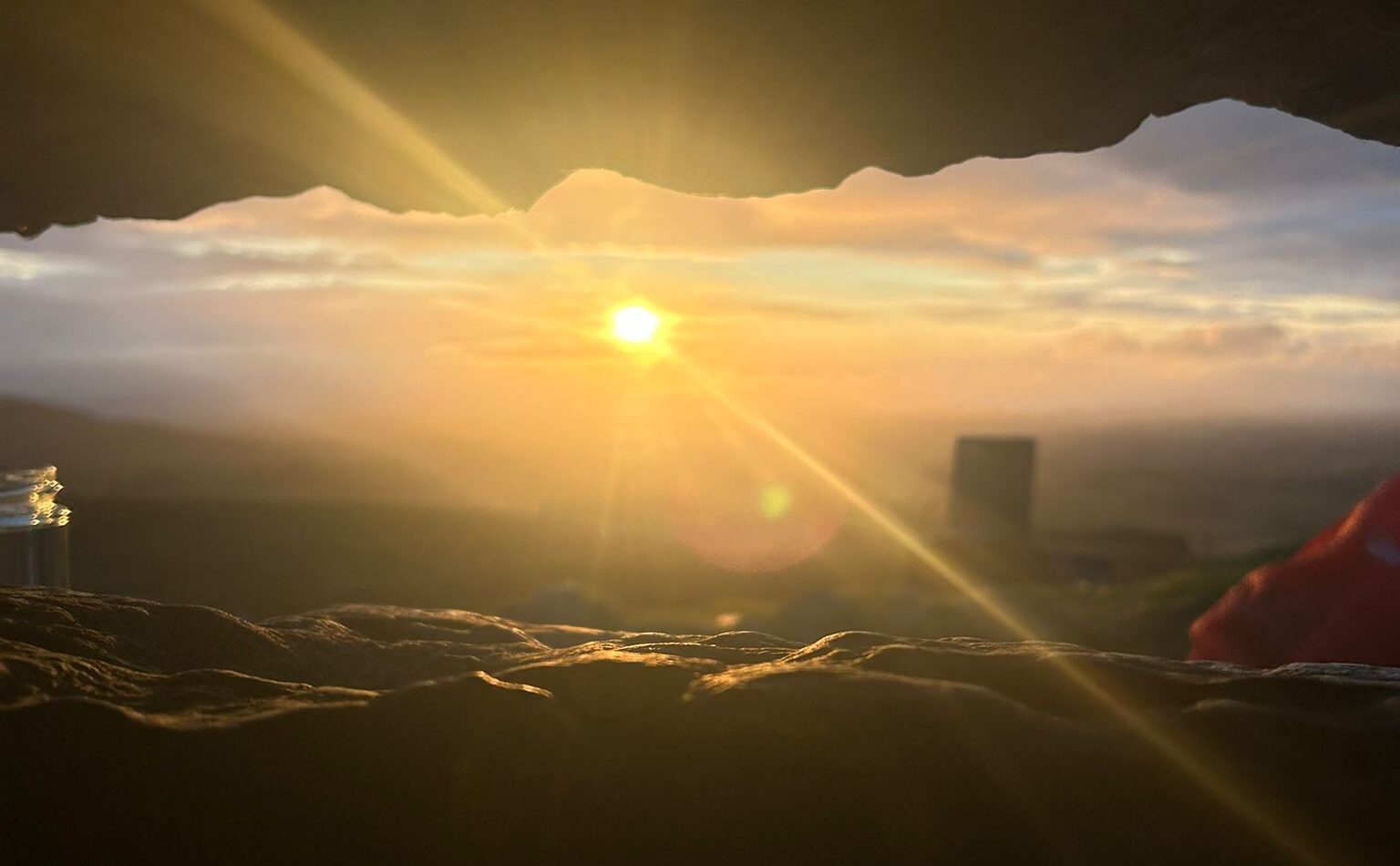
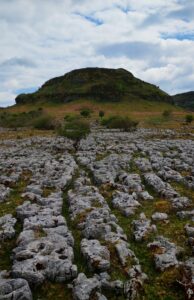
Standing among the cairns of Carrowkeel, it is difficult not to wonder what the people who built these monuments were trying to tell us.
The passage tombs have stood on these hills for over five thousand years. Apparently long before Stonehenge was completed and before the Great Pyramid rose above the sands of Egypt, communities in the west of Ireland were moving stone, shaping landscapes and creating places that still capture our imagination today.
Modern archaeology has revealed much about how these monuments were constructed. Yet the deeper question remains:
Why?
For decades, archaeologist and archaeoastronomer Frank Prendergast has studied Ireland’s passage tomb tradition and the relationship between monuments, landscape and sky. Through careful measurement he has demonstrated that many passage tombs were deliberately orientated towards significant points on the horizon, often associated with the movements of the sun throughout the year.
What interests me most, however, is that Prendergast does not stop at measurement.
In his work, he repeatedly refers to the importance of understanding these sites within a phenomenological framework, not simply asking where a monument points, but asking what it would have felt like to stand there and experience it. He explores the relationship between people, landscape, horizon and skyscape, recognising that meaning may be found not only in alignments but in the experience created by those alignments.
This feels important, because it allows us to consider a different possibility, perhaps the cairns were never intended to be astronomical instruments, which in fairness is pretty cool in itself. But maybe there is something in their design, build and endurance that was intended to create experiences. Experiences of anticipation, connection and experiences of awe.
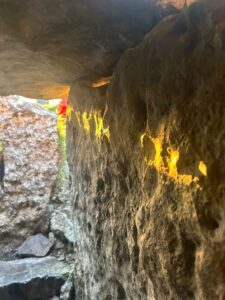
Imagine standing within one of these chambers in near darkness. Waiting. Knowing that on only a handful of days each year, light would enter the monument in a particular way. Knowing that your parents, grandparents and ancestors before you had witnessed the same event. You may experience awe of the unknown, but somewhere back through your lineage, ancestors of yours witnessed this event, and knew why!
The alignment mattered, creating the experience mattered. Being the observer, the witness, mattered. Seeing it happen might feel particularly significant in these modern times of scientific insight.
Modern circadian science tells us that our bodies rely on sunlight to remain synchronised with the rhythms of the Earth. Light enters through the eyes and reaches the suprachiasmatic nucleus, the body’s master clock. This daily encounter with light influences sleep, hormones, metabolism, mood and countless other physiological processes. The role of the suprachiasmatic nucleus in this process has been explained beautifully by Andrew Huberman and others working in the field of circadian biology. The earth rotates on a 24hr cycle. Our bodies operate on a 24.2hr cycle, when we don’t synchronsie with the sun on a daily basis our body clock drifts. We need the light of the sun to synchronise us with the earth!
As I stood reflecting on Carrowkeel, I found myself drawn to an unexpected parallel.
Standing within a passage tomb, witnessing the light of the solstice setting sun move across the inner standing stones towards the back stone of the cairn, I felt myself recognise the imagery. The light entering the cairn, light entering the eye! For what purpose? to reset some internal earthly clock, even if just symbolically, it’s pretty cool.
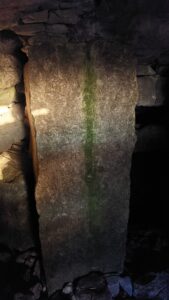
Today, science can describe neurological pathways. It can explain the receptors in the eye, the signals to the brain and the cascade of physiological responses that follow. But perhaps our ancestors always understood this relationship with light, and science is just catching up with this ancient knowledge.
I am not suggesting that sunlight striking a backstone changes the physical workings of the Earth. There is no evidence for that…yet 😉
So for now I simply wonder whether these monuments were designed to remind people of our relationship with something larger than ourselves, the cycles of the seasons, the movements of the heavens, and their place within our living world.
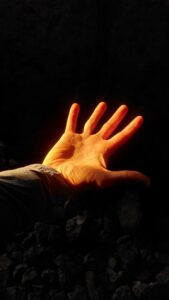
Perhaps the significance was never in the stone itself. Perhaps it was in what happened to the person witnessing the light. And that might be why these monuments continue to move us today. When we pause to watch the horizon, to witness the rising or setting sun, to experience awe without needing to explain it, we reconnect with something ancient and familiar.
For me the true wonder of Carrowkeel is not just the alignment of stone and sunlight, but also the alignment of people across time. Five thousand years ago, someone stood on this ridge, watched the sun meet the horizon. Today, we stand in the same place and witness the same light.
If our ancestors invested extraordinary effort in creating places where light, landscape and human attention converged, what did they want us to understand about the power of that experience?
References
Prendergast, F. (2021). The Alignment of Passage Tombs in Ireland: Horizons, Skyscape and Domains of Power. TU Dublin.
Prendergast, F. (2021). Cultural Meaning in the Relativity of Irish Megalithic Tomb Siting. TU Dublin.
Prendergast, F. (2018). Pathways to the Cosmos: The Alignment of Megalithic Tombs in Ireland and Atlantic Europe. Archaeology Ireland.
Roenneberg, T. (2012). Internal Time: Chronotypes, Social Jet Lag and Why You’re So Tired.
Huberman, A. Various lectures and podcasts on circadian biology, light exposure, sleep and the role of the suprachiasmatic nucleus in regulating human biological rhythms.
